
Belém do Pará, Brazil | January 20–23, 2026
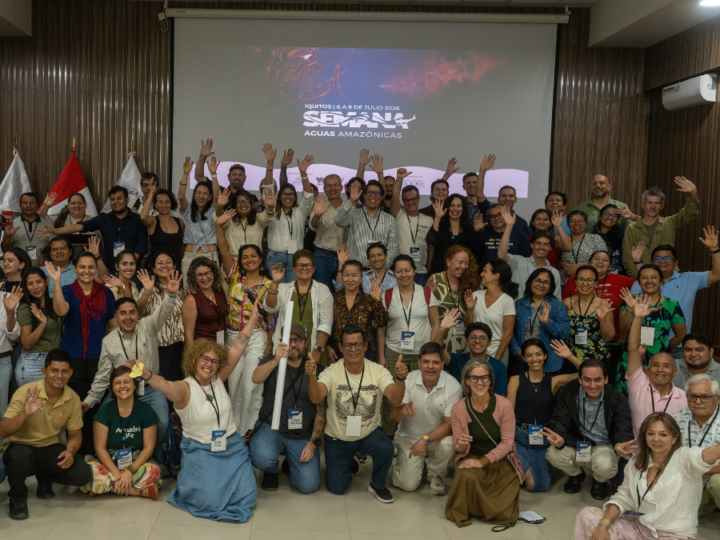
From January 20 to 23, 2026, Amazon Waters held the Dialogue of Knowledge on Migratory Catfish in Belém do Pará— a regional space for dialogue, exchange, and collective construction that brought together 19 delegations of fishers, organizations, and allies from Brazil, Bolivia, Colombia, Ecuador, and Peru.
The Dialogue took place as part of the third cycle of the Dialogues of Knowledge, an initiative aimed at making visible and valuing the knowledge of Amazonian fishers—key actors in fisheries management—and at strengthening their articulation at the basin scale.
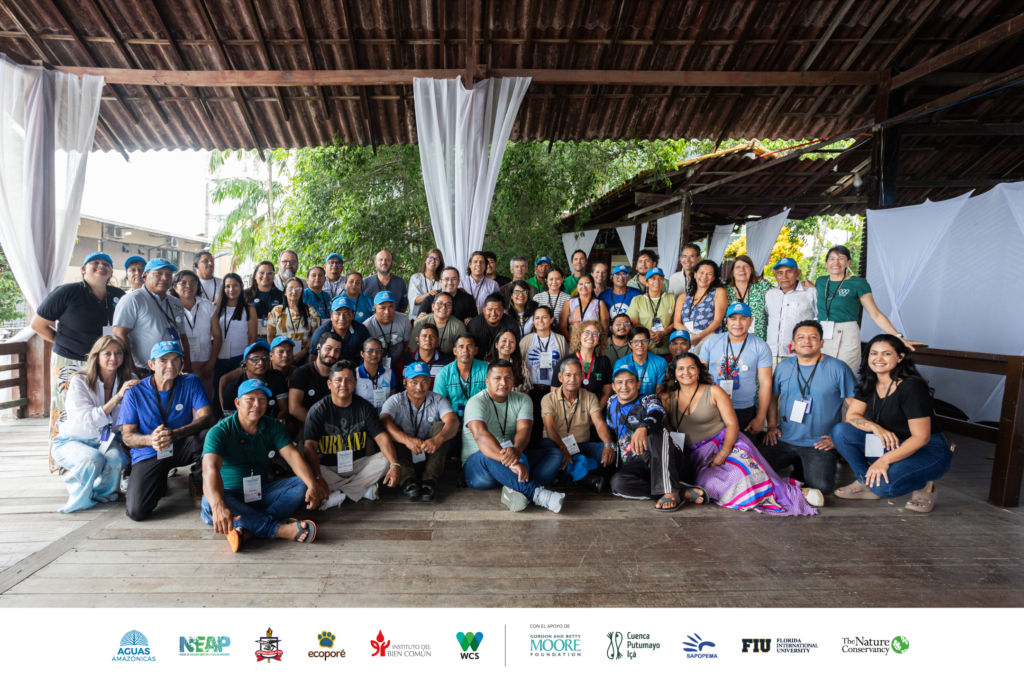
A collective process to reflect on basin-scale management
The overall objective of the meeting was to understand what is happening across different parts of the Amazon Basin in relation to large migratory catfish; to identify fishing practices, the importance of these resources, and their main threats; and to define shared priorities for their management and conservation, while recognizing the diversity of local and subregional contexts.
Participants exchanged local experiences and brought diverse Amazonian realities into dialogue, identifying initiatives and proposals that already contribute to the management of migratory fisheries at the basin scale.
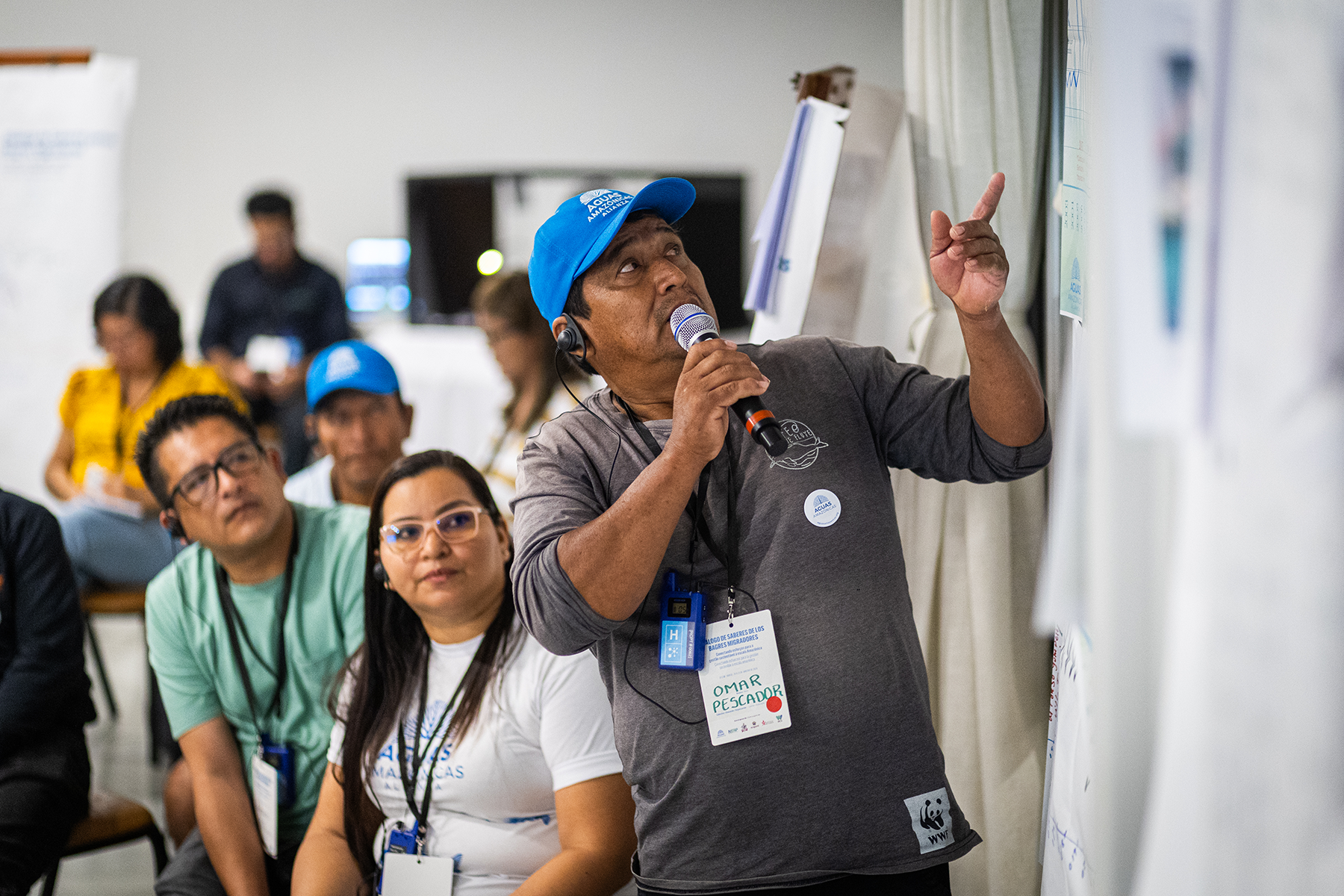
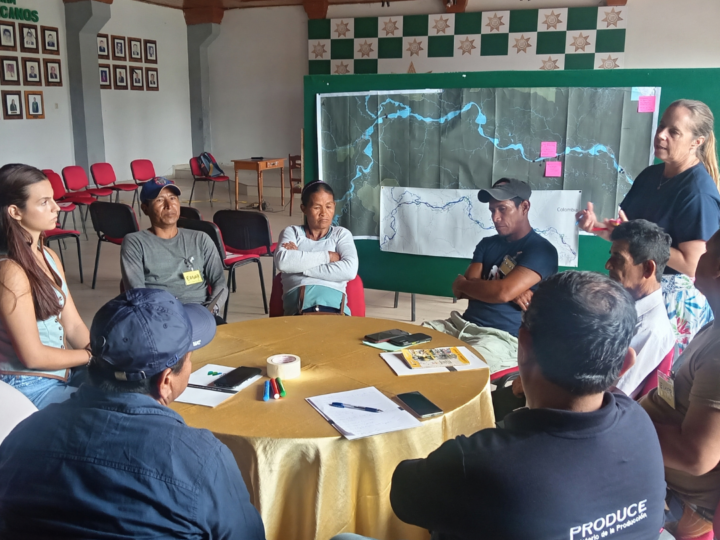
Omar Ortuño, Bolivian fisherman, sharing his fishing experience. Photo: © Arthur Menescal / Amazon Waters
As a result of this collective work, participants prioritized a set of strategic issues to advance shared management of Amazonian migratory catfish. These included strengthening fisher leadership and participation in decision-making spaces; collaborative fisheries management, including local and transboundary fishing agreements; the importance of maintaining basin connectivity in the face of infrastructure impacts; river pollution and its effects on fisheries and community health; and the generation and exchange of information for management, taking into account climate change impacts and the need for clear rules and standards at the regional level.
The collective process moved toward prioritizing actions and advocacy messages, with a clear emphasis on what can be done jointly to strengthen cross-country coordination and reinforce the role of fishers in governance processes related to migratory fish fisheries.
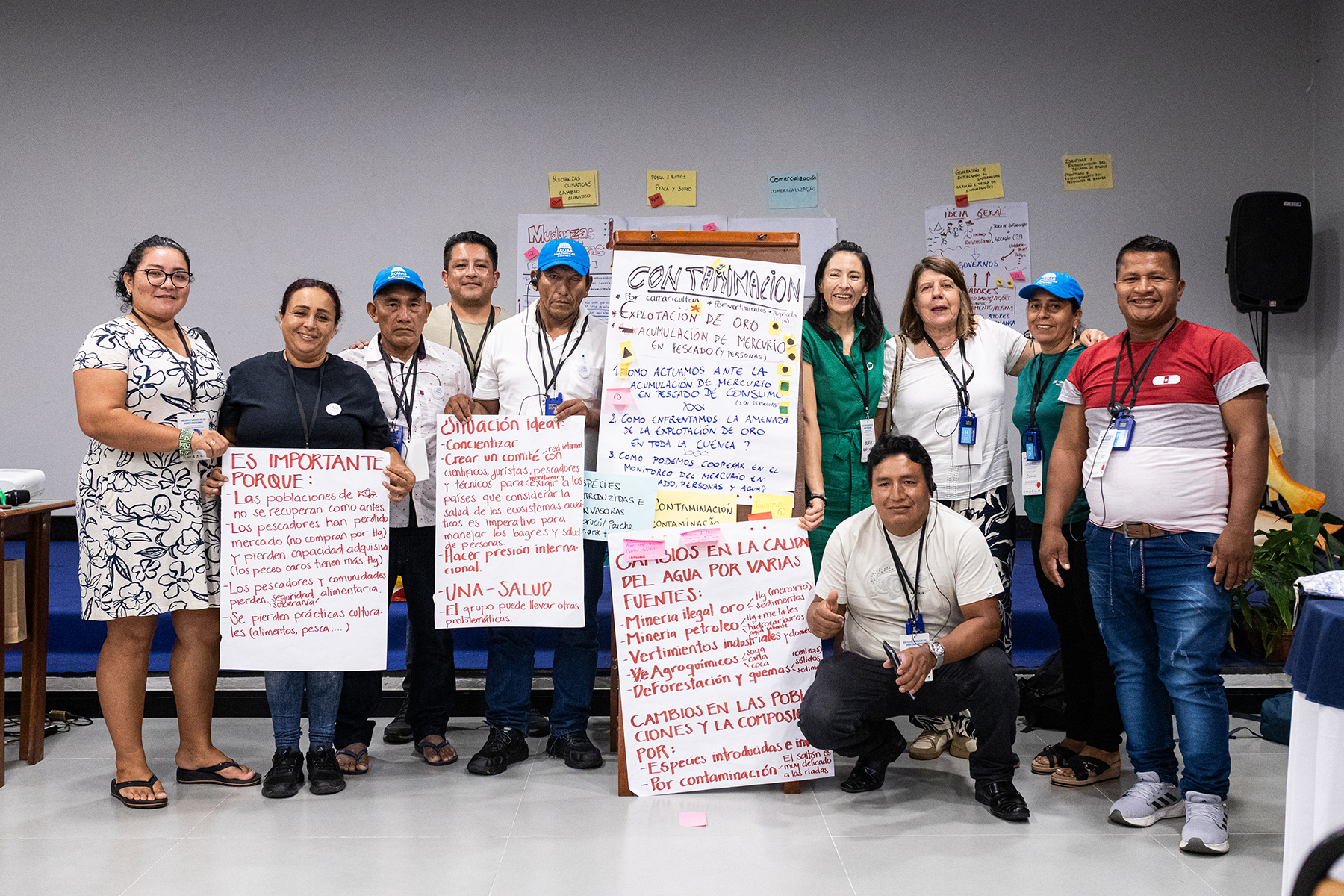
Topics prioritized by fishermen and fisherwomen. Photo: © Arthur Menescal / Amazon Waters.
A manifesto for regional advocacy
As one of the outcomes of this process, fishers from the 19 delegations collectively developed a Community Manifesto, which will be presented at the Conference of the Parties (COP15) to the Convention on the Conservation of Migratory Species of Wild Animals (CMS).
The document highlights the importance of large migratory catfish for Amazon river connectivity and food security, and raises awareness of the threats they face.
The manifesto brings together agreed priorities for the integrated management and conservation of Amazonian migratory catfish, including basin connectivity in the context of infrastructure development, collaborative fisheries management, inclusive and participatory governance, and river pollution.
These priorities align with the pillars of the Regional Action Plan for Amazonian Migratory Catfish, which is expected to be discussed at the upcoming COP 15-CMS.
Knowledge coming together to move forward collectively
This Dialogue reaffirmed the importance of building basin-scale management grounded in connectivity, while recognizing the central role of artisanal fishers and communities in the governance of fisheries associated with migratory fish.
The meeting established shared foundations to move forward together, strengthening ties, priorities, and regional advocacy actions that contribute to the conservation of Amazonian migratory catfish and the well-being of the communities that depend on them.