
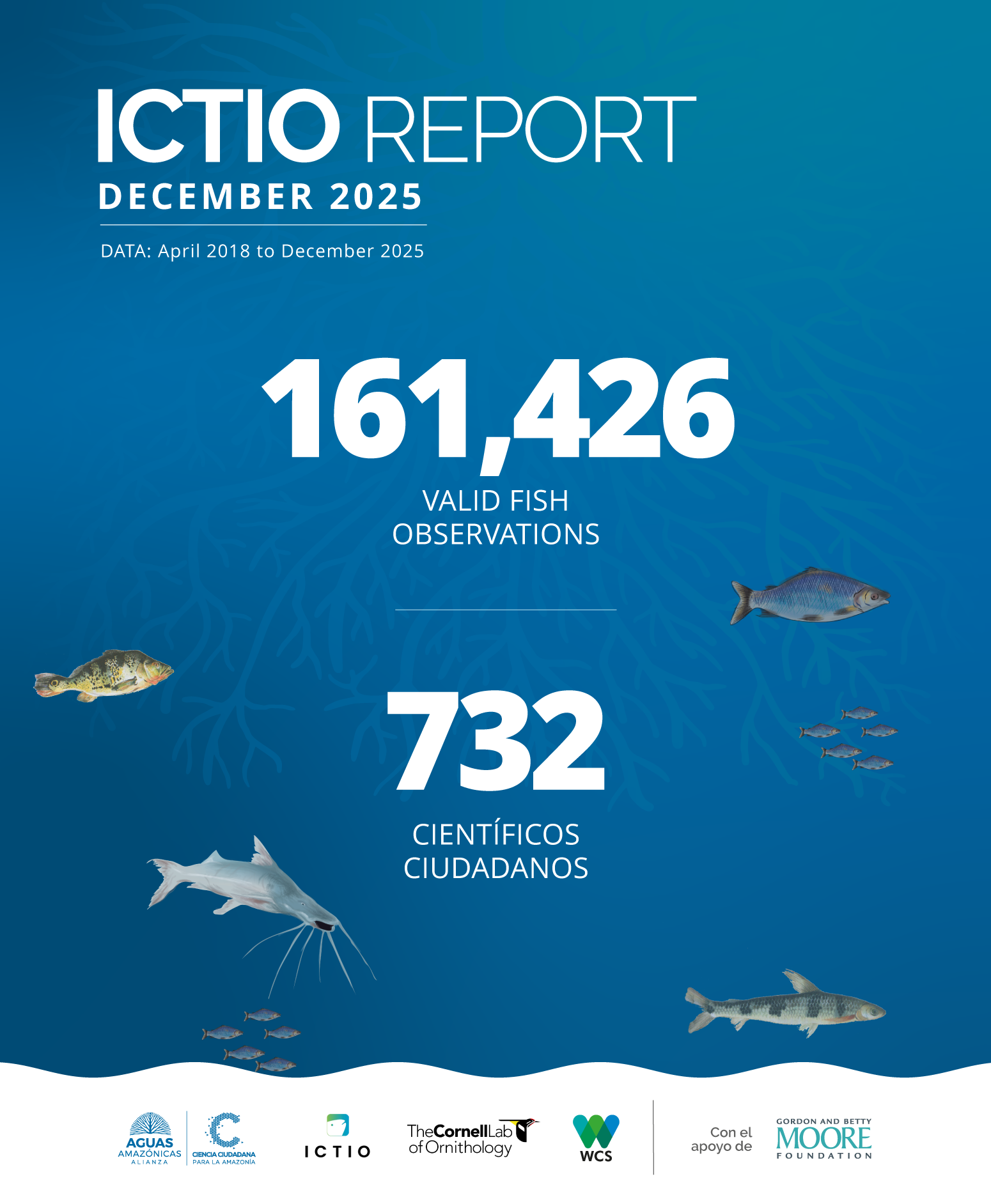
Ictio records 161,426 observations of 121 species/groups of fish, in a total of 105,740 fishing events.
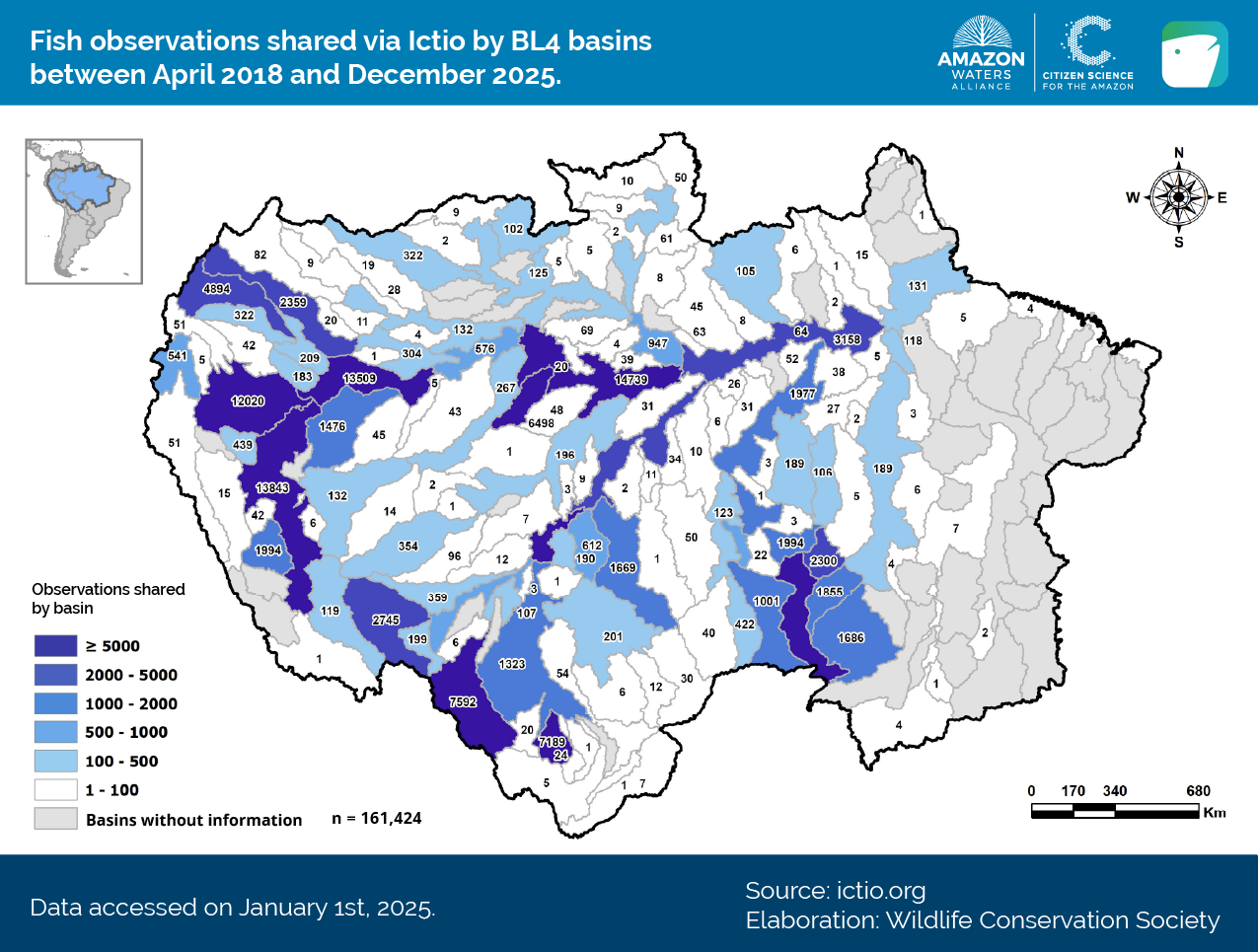
Figure 1 – As of December 31, 2025, Ictio has gathered 161,426 fish observations in 105,740 lists (fishing events). This information was recorded in 153 (77%) of the 198 sub-basins level four of the Amazon.
A total of 732 citizen scientists and organizations shared information in 153 sub-basins level four (BL4) of the Amazon. During this quarter, the records from the ‘Hipona’ sub-basin, part of the Putumayo-Içá River basin in Peru, were incorporated for the first time.
Between October and December 2025, the sub-basins showing the greatest increases in the number of records are located in Peru:
- ‘Huallaga – downstream Mayo’, with an increase of over 3,200%,
- ‘Ucayali’, with an increase of over 950%, and,
- ‘Putumayo-Içá – downstream Igaro Paraná’ with an increase of over 640%.
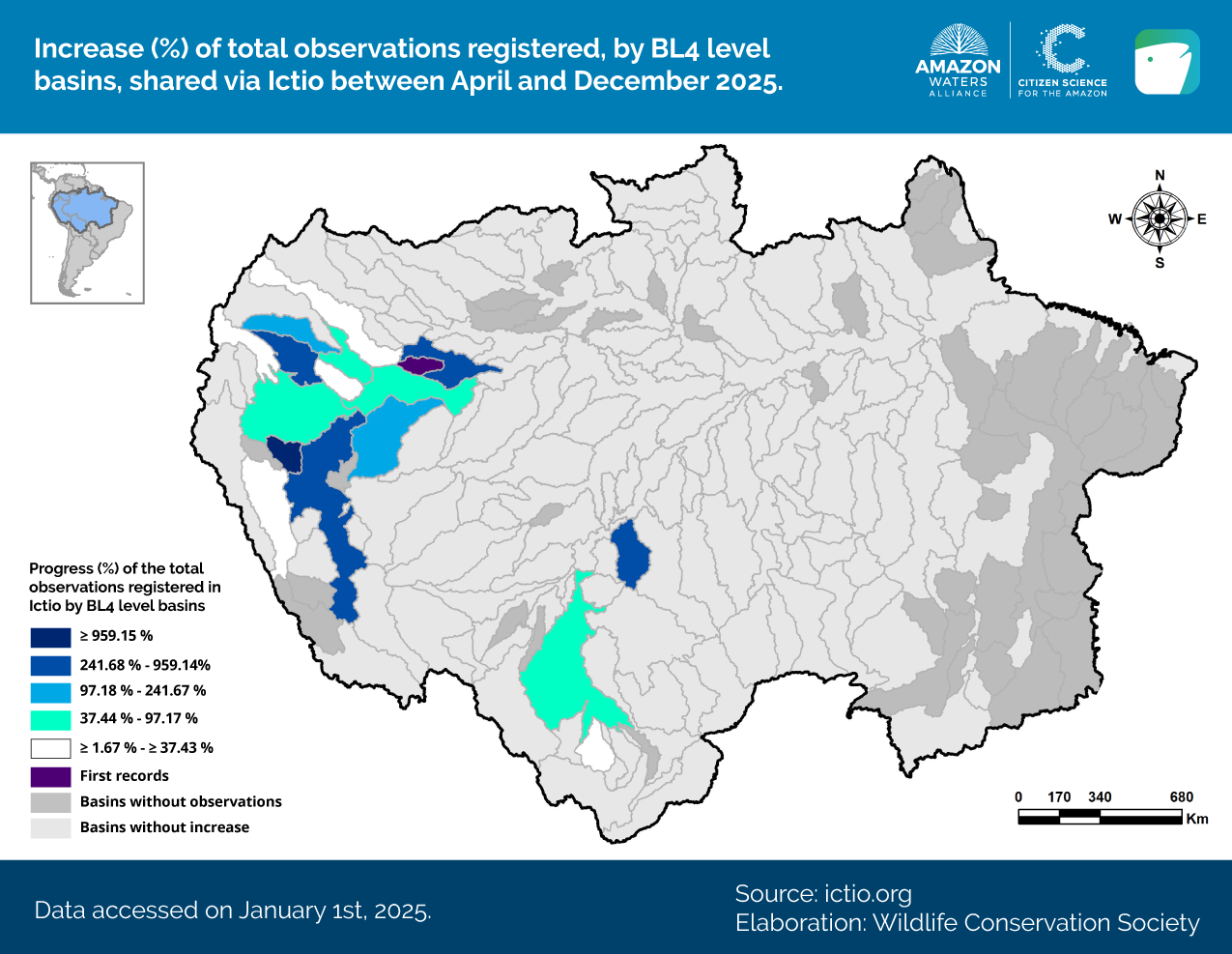
Figure 2 – Increase in Ictio records by BL4 sub-basin between October and December 2025.
Recorded Species
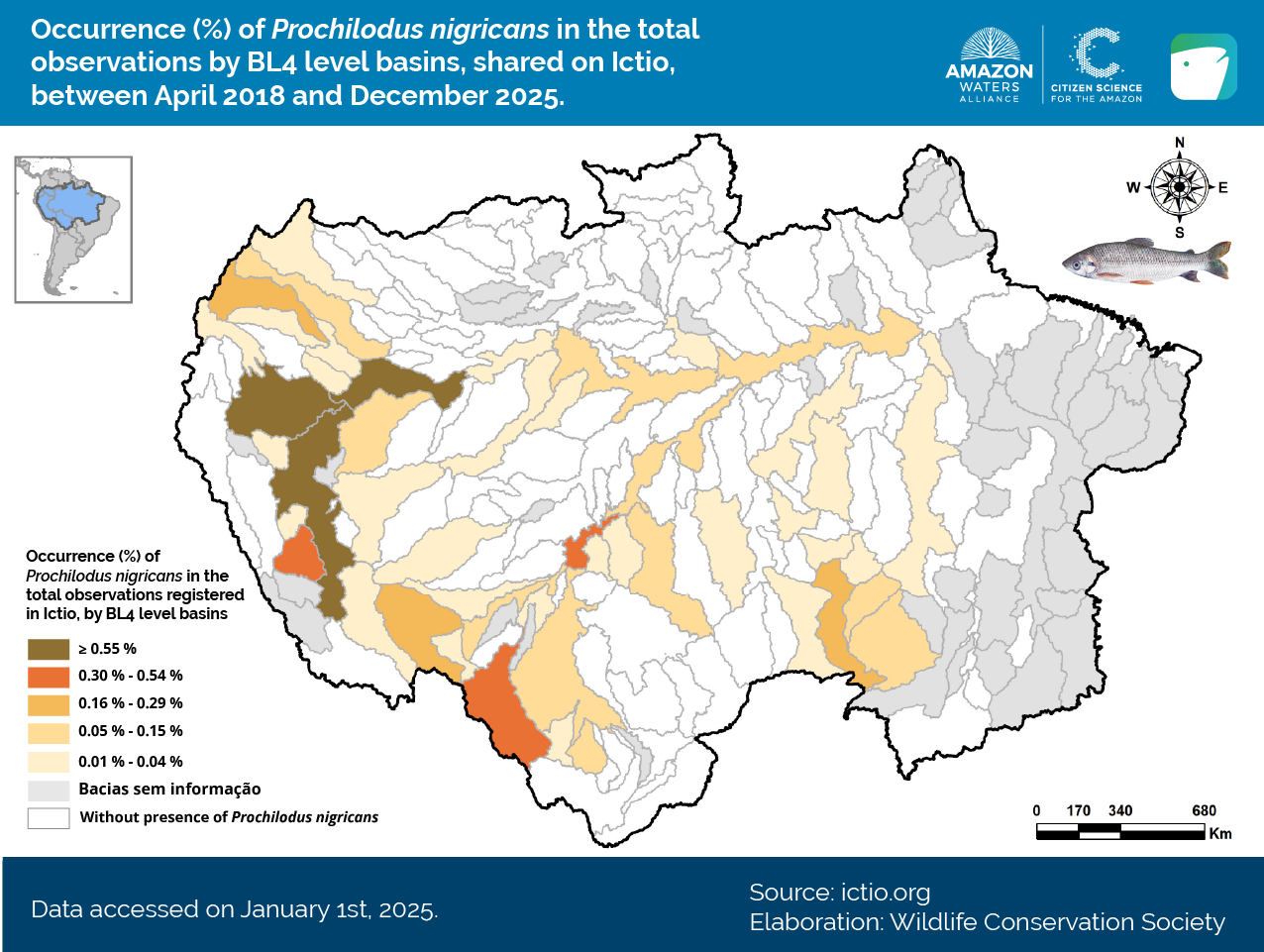
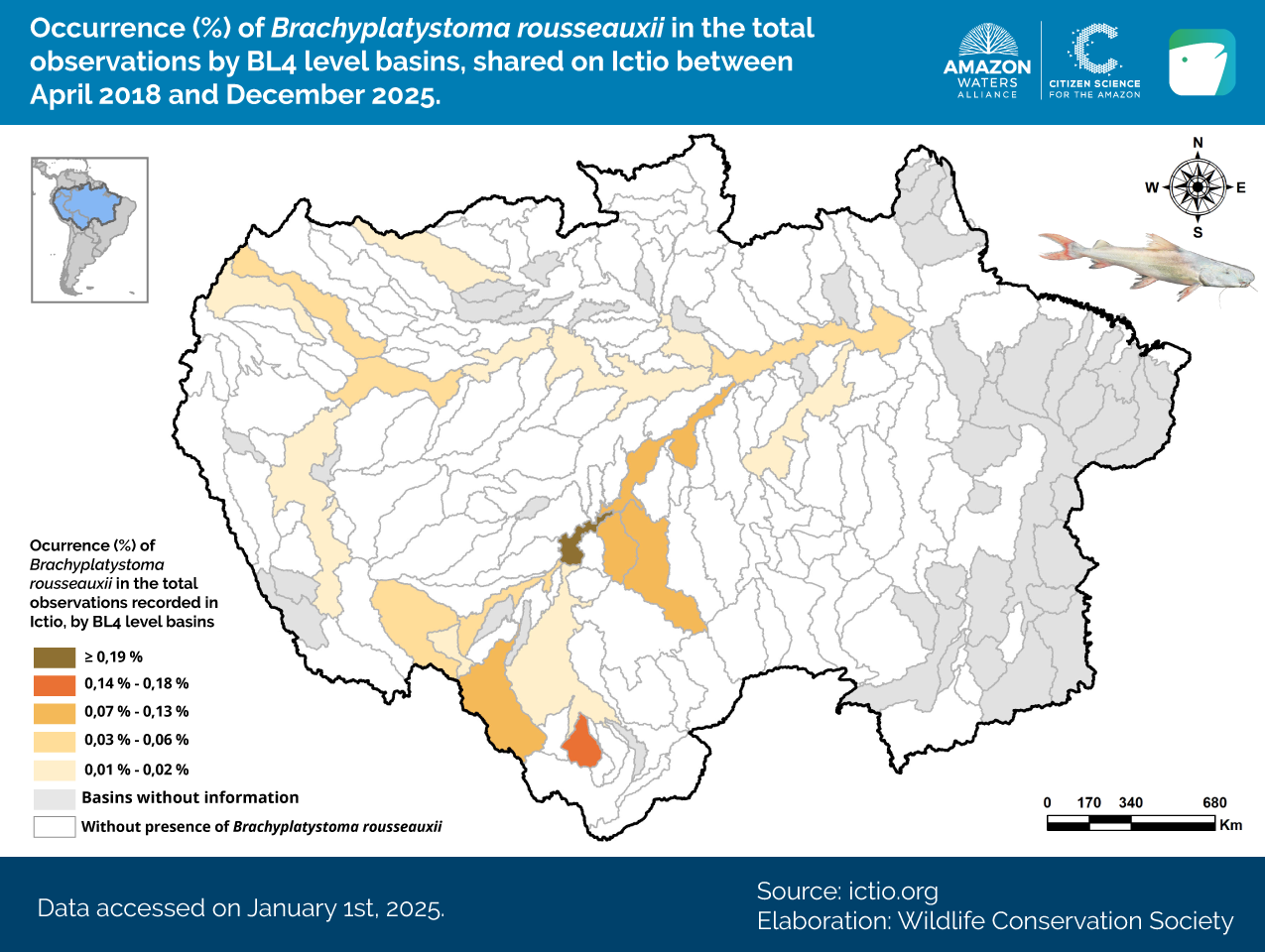
Changes were observed during this quarter among the most frequently recorded fish species. Of the 121 species and species groups registered in Ictio, the bocachico (Prochilodus nigricans) leads in number of records with 9,749 records, followed by yellow zúngaro (Zungaro zungaro) with 9,274 observations and yaraquí (Semaprochilodus insignis) with 8,590 observations.
The ‘other fish’ category, which groups species not individually listed on the platform, reached 9,383 observations.
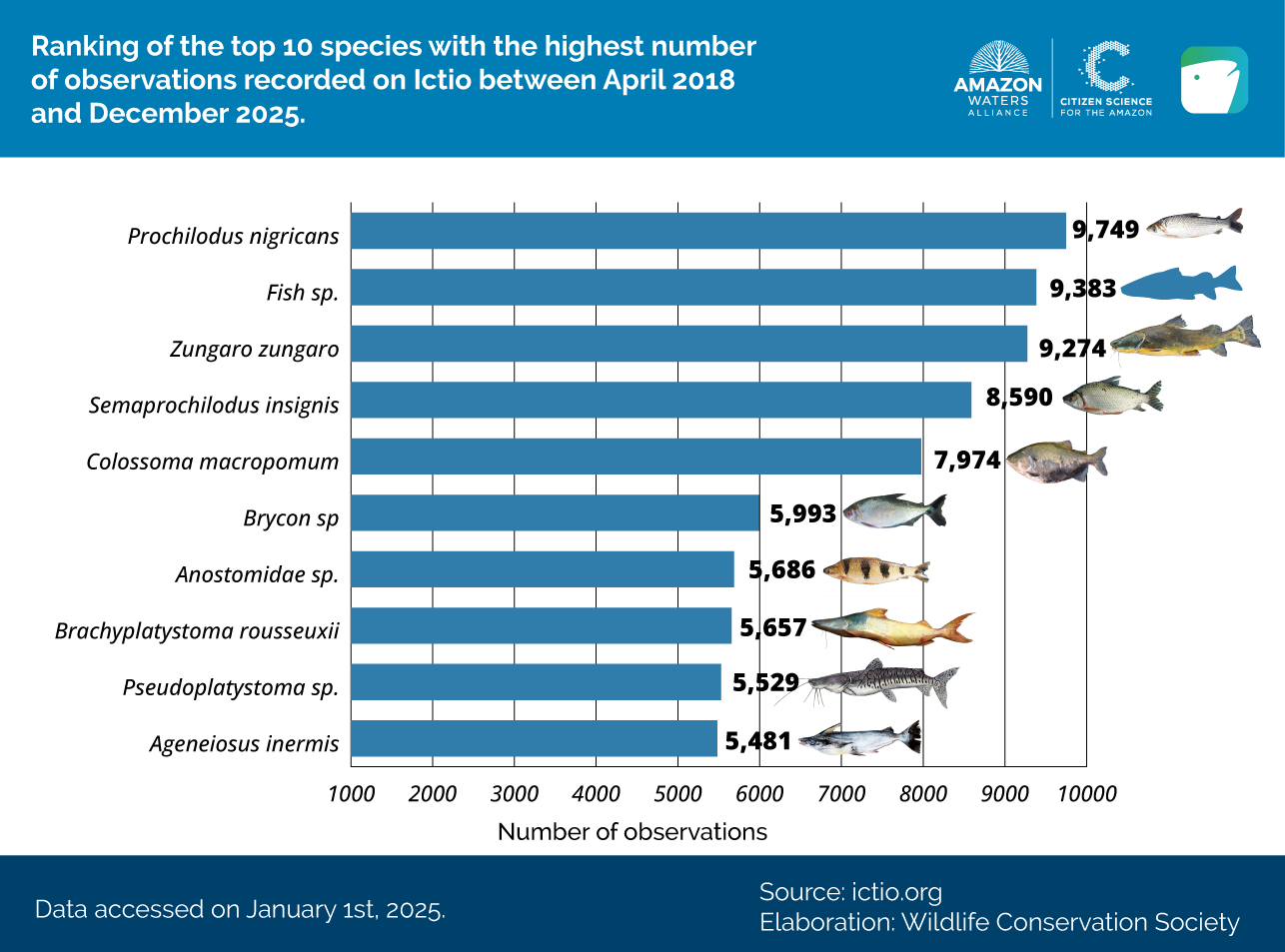
Figure 3 – Species and species groups with the highest number of records in Ictio as of December 31, 2025.
DIREPRO-Loreto Database integrated into Ictio
The Regional Directorate of Production (DIREPRO-Loreto) based in Iquitos, Peru, and responsible for fish landings in the Loreto region has integrated its database into Ictio.
The integration adds over 515,000 fishing records covering more than 60 species or fishgroups captured at over 1,200 fishing sites, with data collected since 2012.
Among the species with the highest number of records in this database are bocachico (Prochilodus nigricans), pacú (Mylossoma sp.), and yahuarachi (Potamorhina sp.).
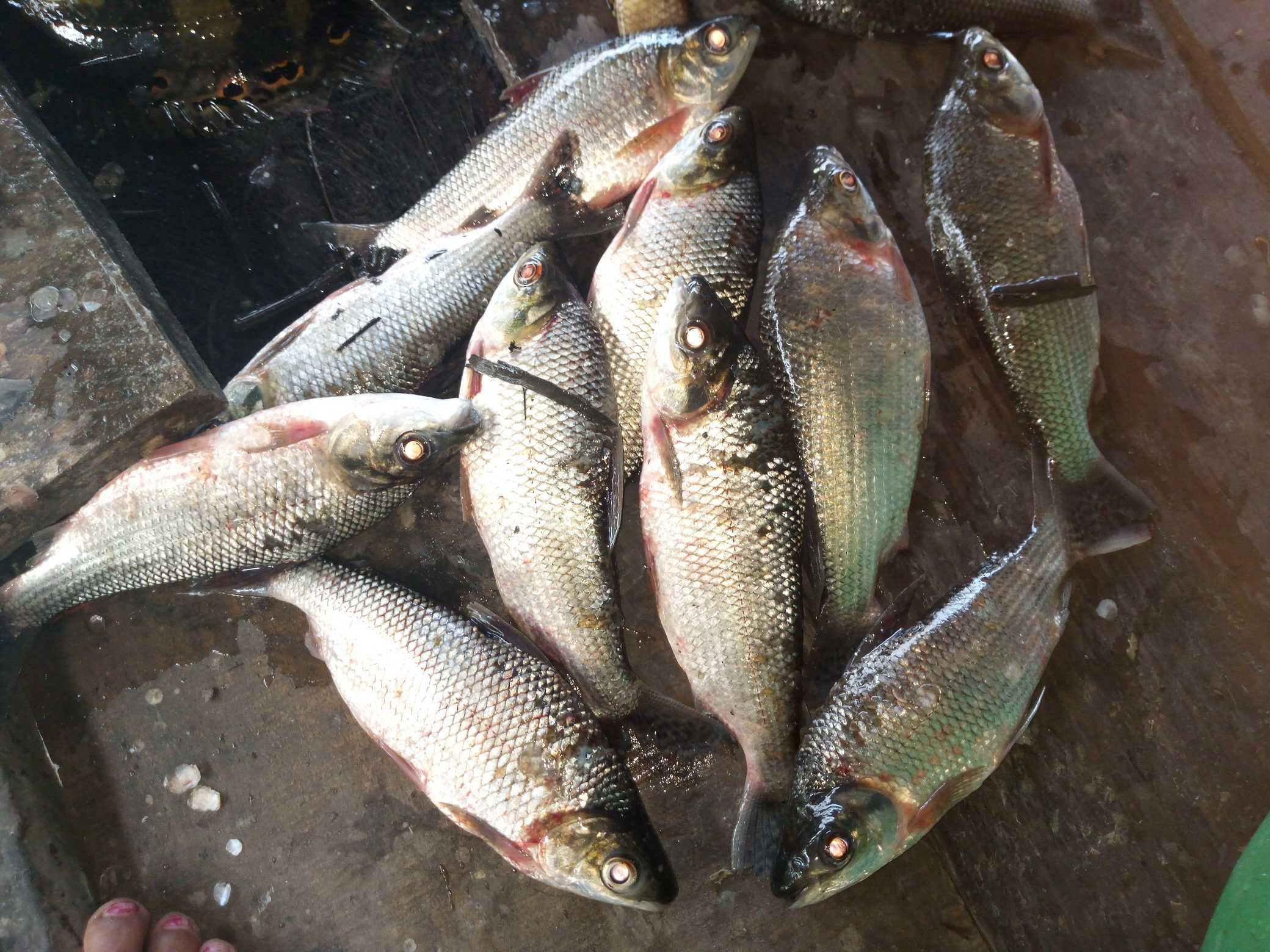
Figure 4 – Bocachicos recorded by Ictio users in the Amazon River, Peru. Fotografía: © Huaysi Pesca / Macaulay Library ML481751971
With this integration, Ictio will increase fivefold in size, consolidating its role as the largest open database on Amazonian fish and a strategic source of information for fishery management at the basin scale. The agreement between Direpro-Loreto, WCS, and the Amazon Waters Alliance includes regular data updates , with new records shared on quarterly bases.
To date, records from 2025 are already available on the platform, and the full database is expected to be incorporated by the first half of 2026. The Amazon Waters Alliance and partners involved in Amazonian fishery management thank DIREPRO-Loreto for this collaboration which strengthens access to key information for decision-making in the region.
*(Learn more about the basin classification used by Ictio, see Venticinque et al., 2016 – “New Geographical Information System (GIS) on Rivers and Basins for the Conservation of Aquatic Ecosystems in the Amazon”).
GLOSSARY
Checklists: Lists of fish caught in a fishing event.
BL4 Basins: Basin level 4 is the scale that delineates all tributary sub-basins between 10,000 km² and 100,000 km².
Observations: Records of species/groups of fish species caught in the Amazon Basin.
Users: Amazonian citizens using the ICTIO application or platform, consisting mainly of local and indigenous peoples, individual fishers, management groups, associations of fishermen, and scientists.

This note is made possible thanks to the support of the Gordon and Betty Moore Foundation. The content is the responsibility of the Wildlife Conservation Society and does not necessarily reflect the views of the Moore Foundation.