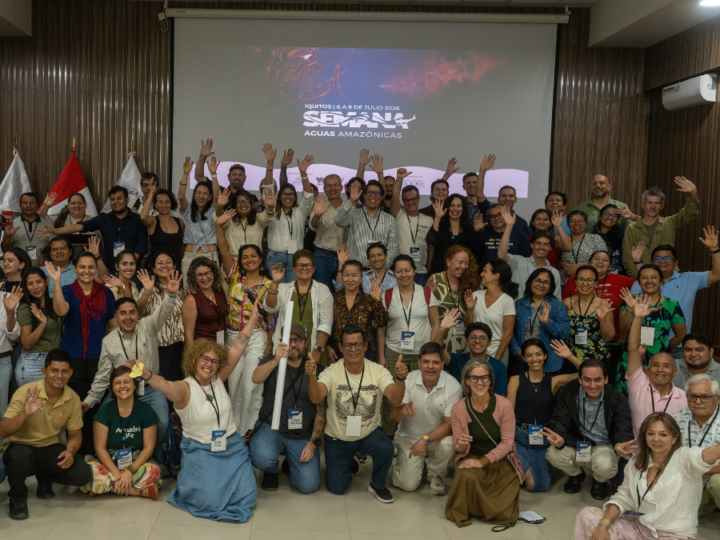

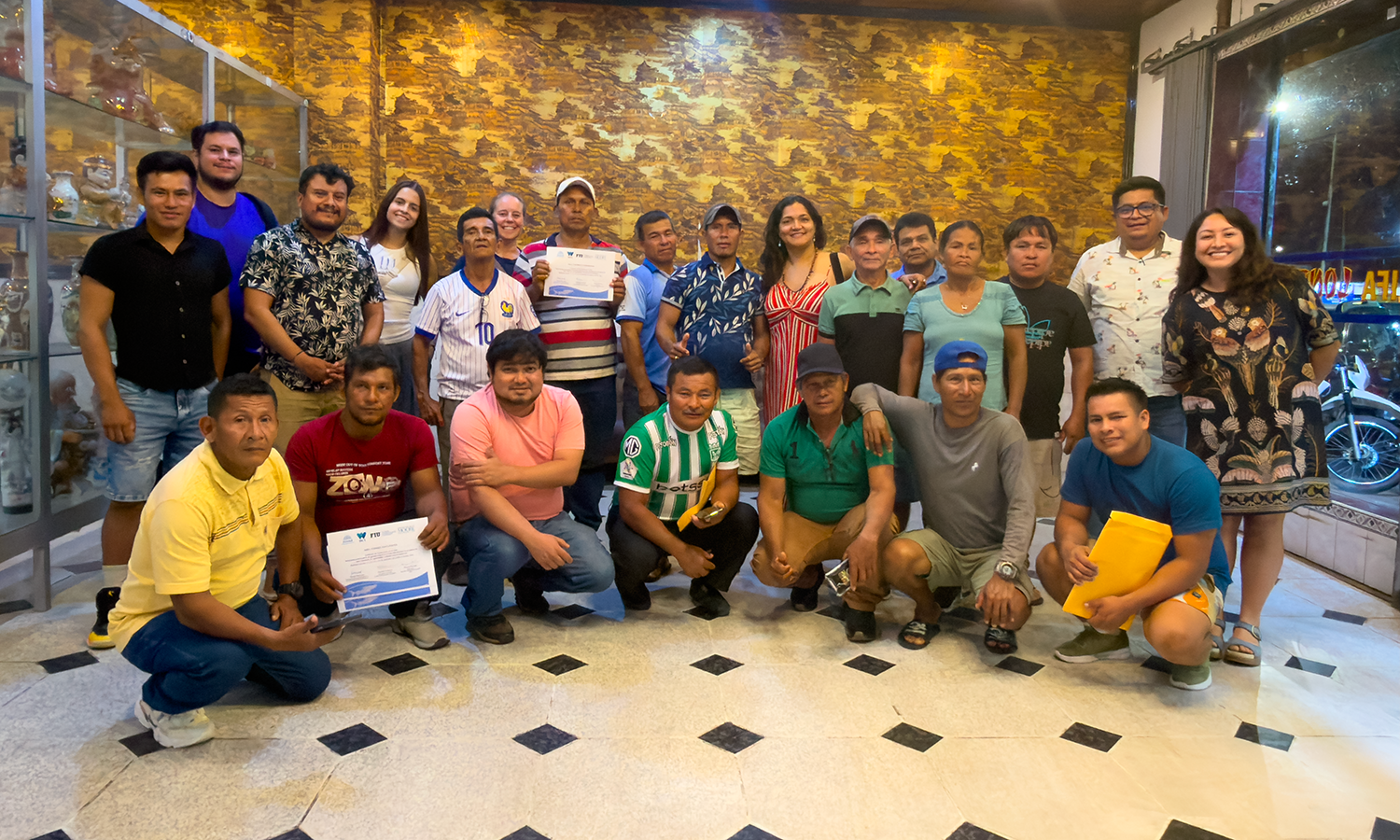
Participants in the Loreto Knowledge Dialogue. Photo: © Fiorella Briceño / Florida International University
Small-scale fishers’ organizations and participating institutions agreed to advance coordination among fishing organizations, collaborative monitoring, and other actions that contribute to the sustainable management of large catfish in Loreto.
Iquitos, September 2026. – During the “Knowledge Dialogue: Governance for Large Catfish Fisheries in Loreto,” held from September 21 to 24 in Iquitos (Perú), small-scale fishers’ organizations and participating institutions agreed to promote the establishment of a regional organization of large-catfish fishers and advance a collaborative fisheries monitoring mechanism in Loreto. These agreements seek to strengthen the representation of fishing organizations, generate information on this activity, and contribute to improving the management of these species.
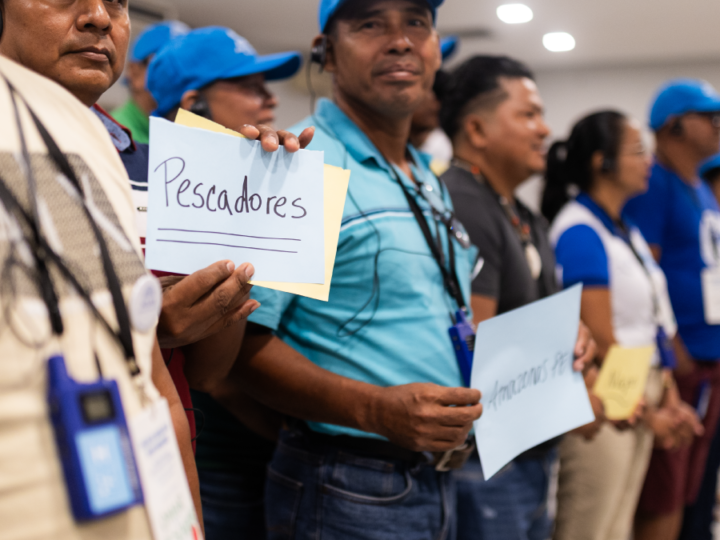
The event brought together fishers from five Social Organizations of Small-Scale Fishers (OSPAs) and three Small-Scale Fishing Association (APA), as well as representatives of Florida International University (FIU), Instituto del Bien Común (IBC), Wildlife Conservation Society (WCS), the Peruvian Amazon Research Institute (IIAP), and the Regional Directorate of Production of Loreto (DIREPRO-L), within the framework of the Amazon Waters Alliance.
The goal was to exchange knowledge and proposals to strengthen the sustainable management of large catfish and create spaces for coordination among fishing organizations, technical institutions, and authorities. Knowledge dialogues are participatory spaces aimed at analyzing and developing proposals based on the knowledge and experiences of participants.
Over the course of the sessions, participants analyzed the large-catfish value chain in Loreto, identified challenges to the sustainability of fishing activities, and reviewed opportunities to strengthen organization, formalization, monitoring, and the marketing of fishery products.
Fishers also took part in practical training on good handling and processing practices for large catfish at CITE Productivo Maynas. During the training, they prepared products such as fillets, burgers, and sausages, exploring alternatives to generate greater added value from fishing activities.
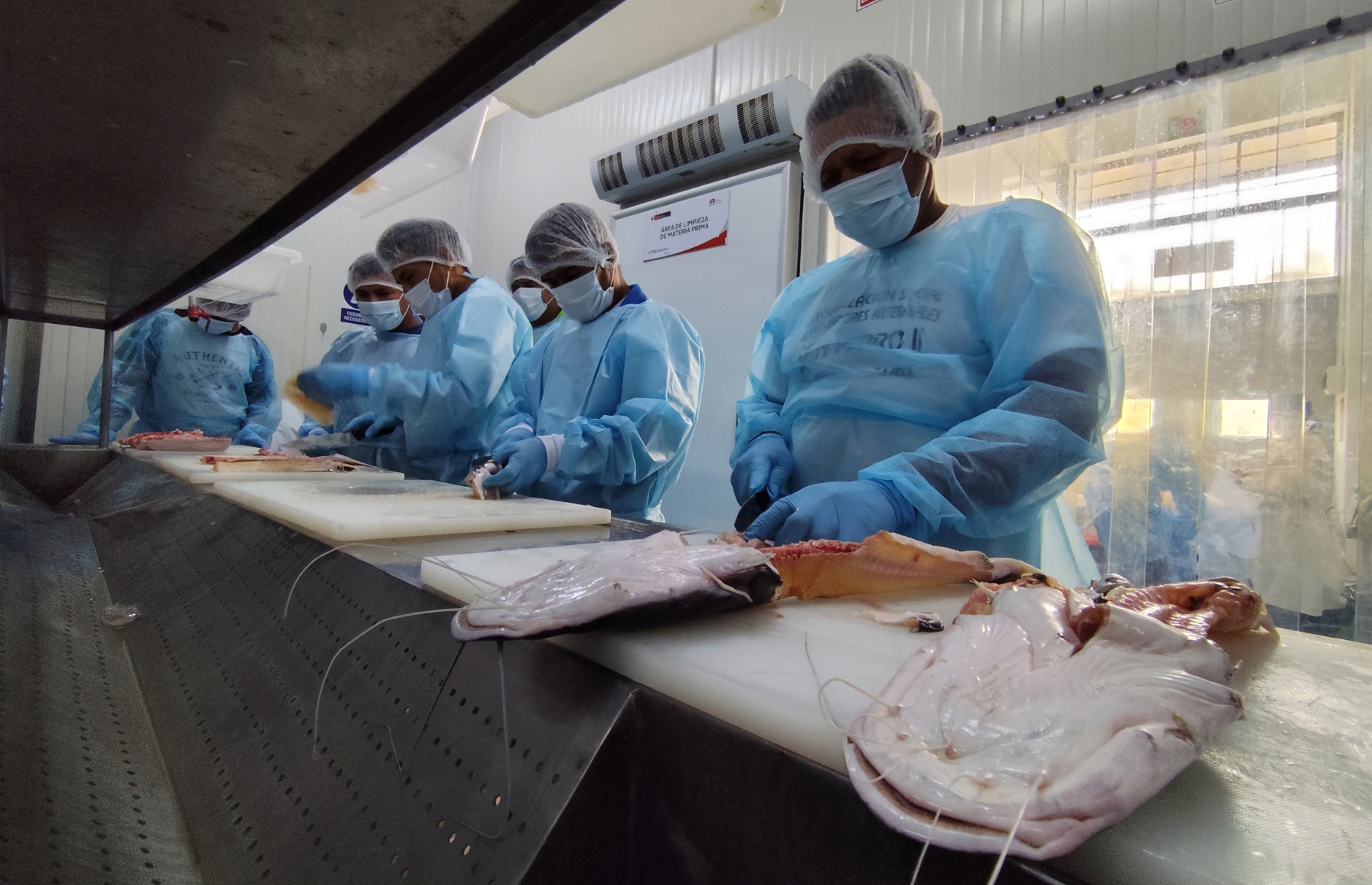
Training on best practices for handling and processing large catfish. Photo: © CITE Productivo Maynas
The products were later presented during a tasting and feedback session with Ikiitu restaurant in Iquitos. The activity provided an opportunity to gather feedback on quality, presentation, and traceability, as well as to learn about commercial opportunities from the perspective of the local food service market.
One of the main agreements was to promote the establishment of a regional organization of small-scale large-catfish fishers in Loreto. The proposal seeks to bring together the five OSPAs and three APAs involved in this fishery, strengthen their representation, and facilitate joint actions to improve the sustainable management of fishery resources.
“In the Loreto region, FIU research involving more than 70 large-catfish fishers in 2024 documented 44 years of changes in this type of fishery, pointing to a highly vulnerable situation, with many pressures that are not being managed and a high degree of invisibility of these fishers. The only possible way to improve this situation is through collaboration and fisheries management. This is the third meeting with this group of fishers, and it is building a path toward improved fisheries management and connectivity,” said Vanessa Rodriguez, Chair of the Board of Directors of the Amazon Waters Alliance.
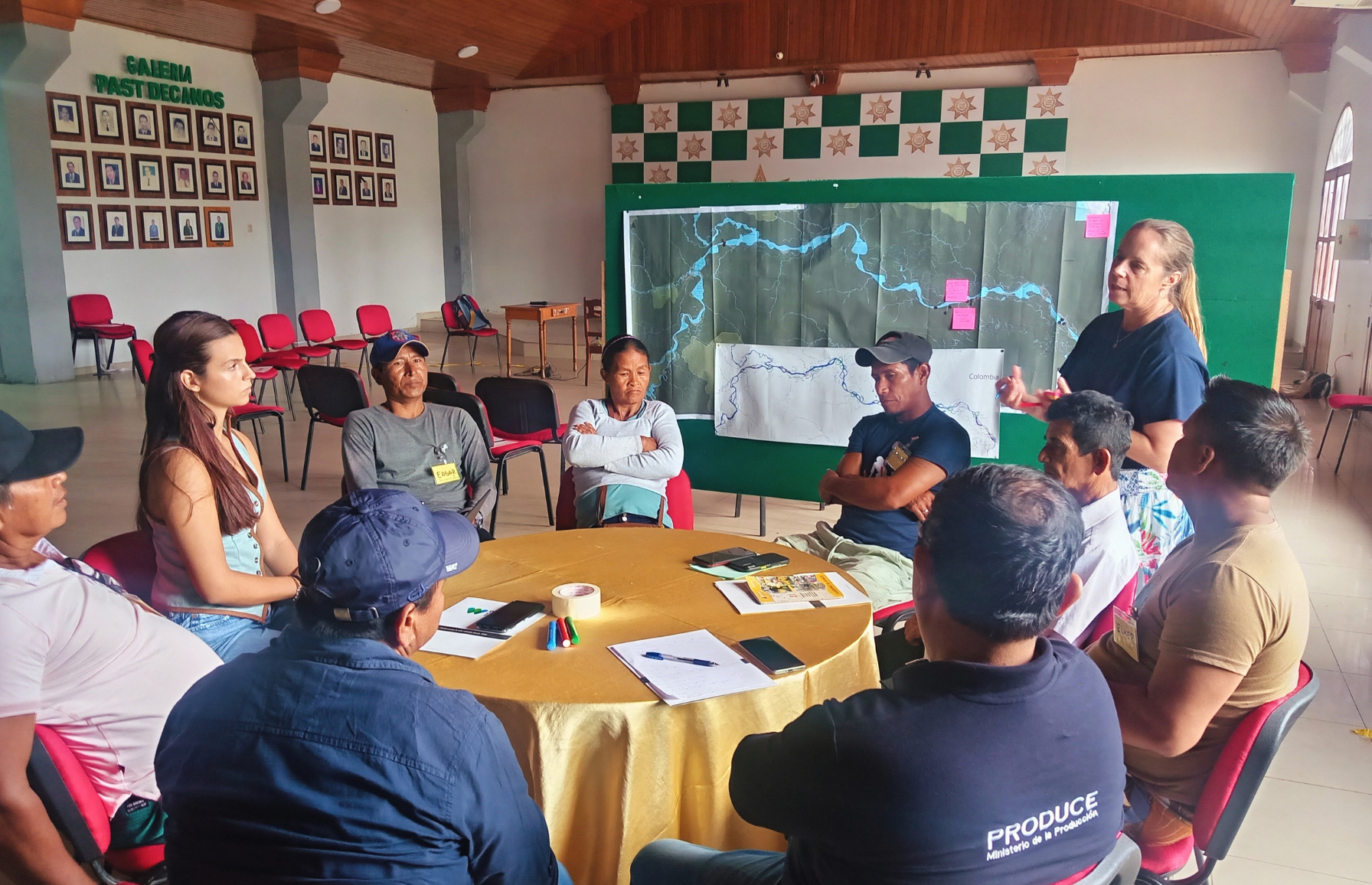
Photo: © Luis Moya / WCS
“Only when we are together can we be stronger when engaging with national and regional authorities and presenting our concerns as fishers from the central channel of the Amazon, because our fishery is different and largely unknown. We need to make our voices heard,” said Josías Ramírez Cora of OSPA Los Delfines.
The organizations also agreed to progressively advance a collaborative fisheries monitoring mechanism and expand research on large-catfish fisheries in the region. The initiative seeks to generate information on species caught, sizes, volumes, fishing areas, and fishing seasons, while incorporating the observations and knowledge of fishers themselves.
“Catfish fishers from five fishing areas, from Puerto Alegría to Indiana, have a wealth of knowledge and practices that have been little studied by science and have much to contribute. These fisheries have been extensively studied from an ecological perspective, but not as much from a management perspective,” said Elizabeth Andersen.
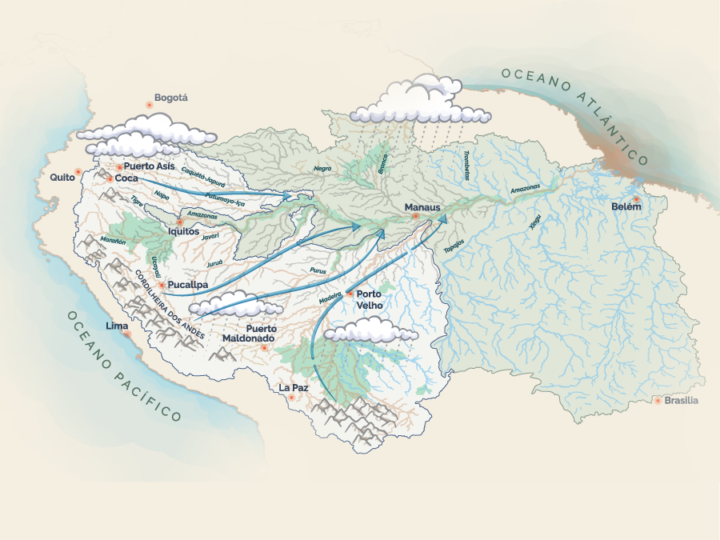
Greater information on these fisheries, their dynamics, and their connections with other parts of the basin will help strengthen knowledge generation and provide information to support decision-making and fisheries management in the region.
At the close of the meeting, the fishing organizations and participating institutions agreed to develop a 2026–2027 roadmap and establish a follow-up group to continue work on the commitments reached. The group will include representatives of the fishing organizations, FIU, IBC, IIAP, WCS, and DIREPRO-L.